Mastering Style Proportions: 5 Rules for Flattering Every Body Type in 2026
Anúncios
Mastering Style Proportions: 5 Rules for Flattering Every Body Type in 2026
In the ever-evolving world of fashion, trends come and go, but one fundamental principle remains timeless: the power of style proportions. Understanding how to balance your silhouette, highlight your best features, and create visual harmony in your outfits is the ultimate secret to looking effortlessly chic and feeling incredibly confident. This isn’t about conforming to a specific body ideal; it’s about celebrating your unique shape and dressing in a way that makes you feel your absolute best. In 2026, as personal expression continues to dominate the fashion landscape, mastering style proportions guide becomes more crucial than ever. It’s the key to making every piece in your wardrobe work harder for you, transforming good outfits into great ones.
Anúncios
Many people mistakenly believe that looking good is solely about wearing expensive brands or following the latest fads. While those elements can play a role, true style emanates from a deeper understanding of how clothes interact with your body. It’s about recognizing lines, shapes, and volumes, and strategically employing them to create an aesthetically pleasing and flattering overall look. This comprehensive guide will delve into five essential rules of style proportions guide that will empower you to dress with intention and confidence, regardless of your body type. We’ll break down complex concepts into actionable advice, ensuring that by the end, you’ll have a robust toolkit to elevate your personal style.
Forget the notion that certain styles are only for certain body shapes. With a firm grasp of proportion, you’ll discover how to adapt almost any trend to suit your unique physique. This isn’t about hiding or minimizing; it’s about enhancing and celebrating. So, whether you’re petite, tall, curvy, athletic, or anything in between, prepare to unlock a new level of fashion enlightenment. Let’s embark on this journey to decode the art of style proportions guide and transform your wardrobe for 2026 and beyond.
Anúncios
Rule 1: Embrace the Rule of Thirds – The Golden Ratio of Fashion
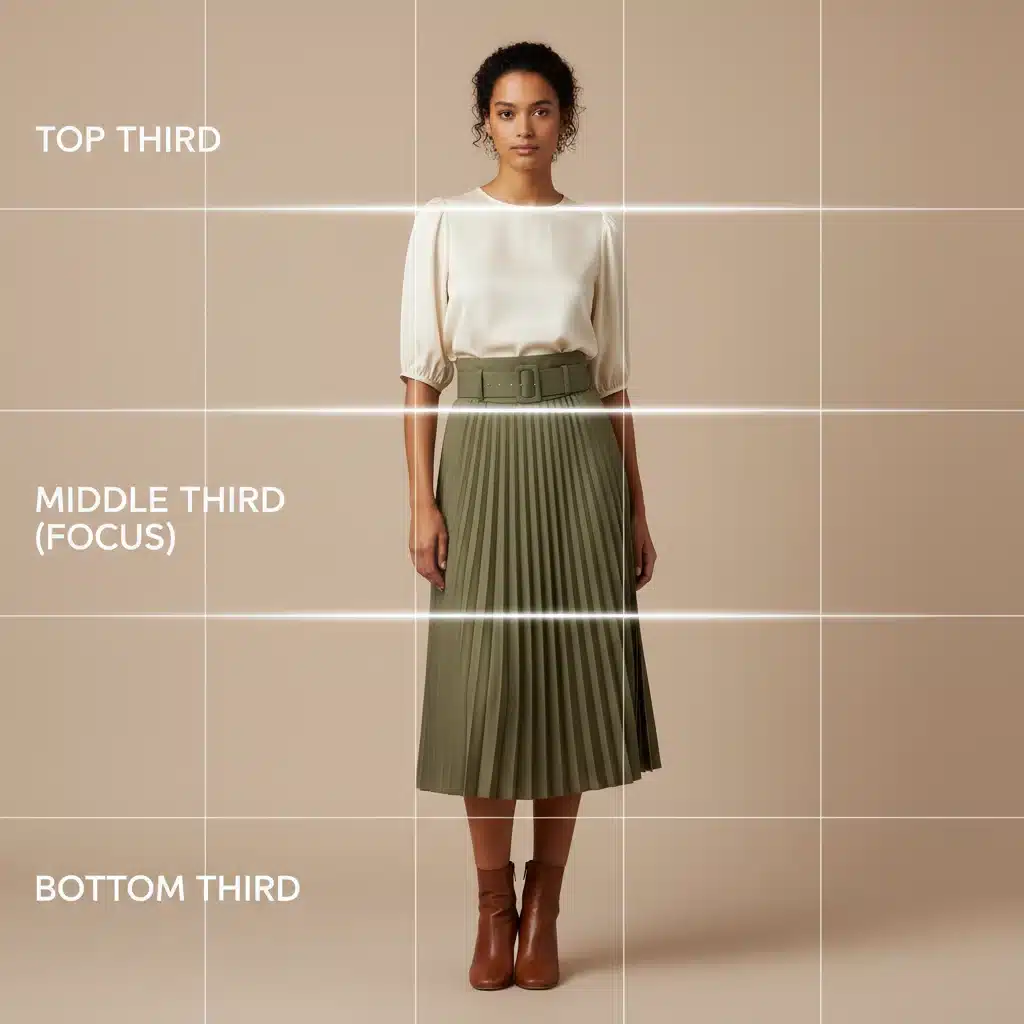
The Rule of Thirds is a cornerstone principle in art, photography, and design, and it translates beautifully into fashion as a fundamental style proportions guide. This rule suggests that an image or composition is most pleasing when its elements are divided into thirds, rather than halves. In clothing, this means avoiding outfits that cut your body into two equal halves (e.g., a top and bottom of the same length, or a belt placed exactly at your natural waist if it creates a 50/50 split). Instead, aim for divisions that are roughly one-third to two-thirds.
Applying the Rule of Thirds to Your Outfits
- High-Waisted Bottoms: One of the easiest ways to apply the Rule of Thirds is by opting for high-waisted skirts or trousers. When paired with a tucked-in or cropped top, this creates a division where your legs appear longer (two-thirds) and your torso shorter (one-third). This is incredibly flattering for almost every body type, as it elongates the lower body and defines the waist.
- Longer Tops with Shorter Bottoms: Conversely, you can wear a longer top (like a tunic or a long cardigan) with shorter bottoms (like shorts or a mini skirt). Here, the top would represent two-thirds and the exposed legs one-third. However, be mindful of the overall volume to avoid overwhelming your frame.
- Layering: Layering is an excellent tool for manipulating proportions. A long blazer over a shorter top and trousers can create intriguing vertical lines and break up the body into thirds, even if the individual pieces don’t strictly adhere to the rule on their own.
- Belts: While a belt can define your waist, its placement is critical. A belt placed too low can shorten your legs, while one placed too high (e.g., above your natural waist) can lengthen your torso in an unbalanced way. Experiment with belts at your natural waist or slightly above to create a 1/3-2/3 split that flatters your unique shape.
Understanding and applying the Rule of Thirds is a game-changer for anyone looking to refine their style proportions guide. It’s not about strict measurements but about creating visual interest and elongating your frame in a harmonious way. This principle forms the foundation for many other styling tricks and will instantly make your outfits look more polished and intentional.
Rule 2: Understand Volume and Balance – The Art of Visual Harmony
Volume management is another critical aspect of the style proportions guide. It refers to the amount of space your clothing takes up around your body. An outfit that is entirely voluminous can overwhelm your frame, making you appear shapeless. Conversely, an outfit that is too fitted everywhere can sometimes feel restrictive or unflattering. The key lies in creating balance – pairing volume with structure, and loose with fitted.
Strategies for Balancing Volume
- Opposites Attract: This is perhaps the most straightforward rule. If you’re wearing something voluminous on your top half (e.g., an oversized sweater, a puff-sleeved blouse), balance it with something more fitted on your bottom half (e.g., skinny jeans, a pencil skirt). Similarly, if you’re wearing wide-leg trousers or a full skirt, pair it with a more fitted or structured top. This creates a pleasing contrast and prevents your silhouette from looking boxy or overwhelming.
- Strategic Tucking: Tucking in your shirt, either fully or partially (the ‘French tuck’), is an excellent way to introduce structure and define your waist, even when wearing a looser top. It helps to control volume at the waistline and allows you to wear more relaxed pieces without losing your shape.
- Fabric Choice: The fabric of your clothing also plays a role in volume. Stiff fabrics like heavy denim or thick wool will hold their shape and add more visual volume, while soft, drapey fabrics like silk or rayon will flow and create less bulk. Be mindful of how different fabrics contribute to the overall silhouette.
- Consider Your Frame: If you have a petite frame, be cautious with excessive volume, as it can easily swallow you. Opt for pieces with controlled volume or strategic tailoring. Taller individuals can generally carry more volume, but still benefit from balancing it with more streamlined elements.
Mastering volume and balance is about creating dynamic tension in your outfit. It ensures that your clothes complement your body rather than competing with it. By consciously thinking about how much ‘space’ each garment occupies, you’ll be well on your way to perfecting your style proportions guide.
Rule 3: Define Your Waist – The Power of the Midsection
The waist is often considered the narrowest part of the torso for many body types, and defining it can dramatically enhance your style proportions guide. Even if you don’t have a naturally defined waist, you can create the illusion of one, which instantly gives your silhouette more shape and structure. This rule is particularly effective for creating an hourglass effect or simply preventing your body from looking like a single, unbroken column.
Techniques for Waist Definition
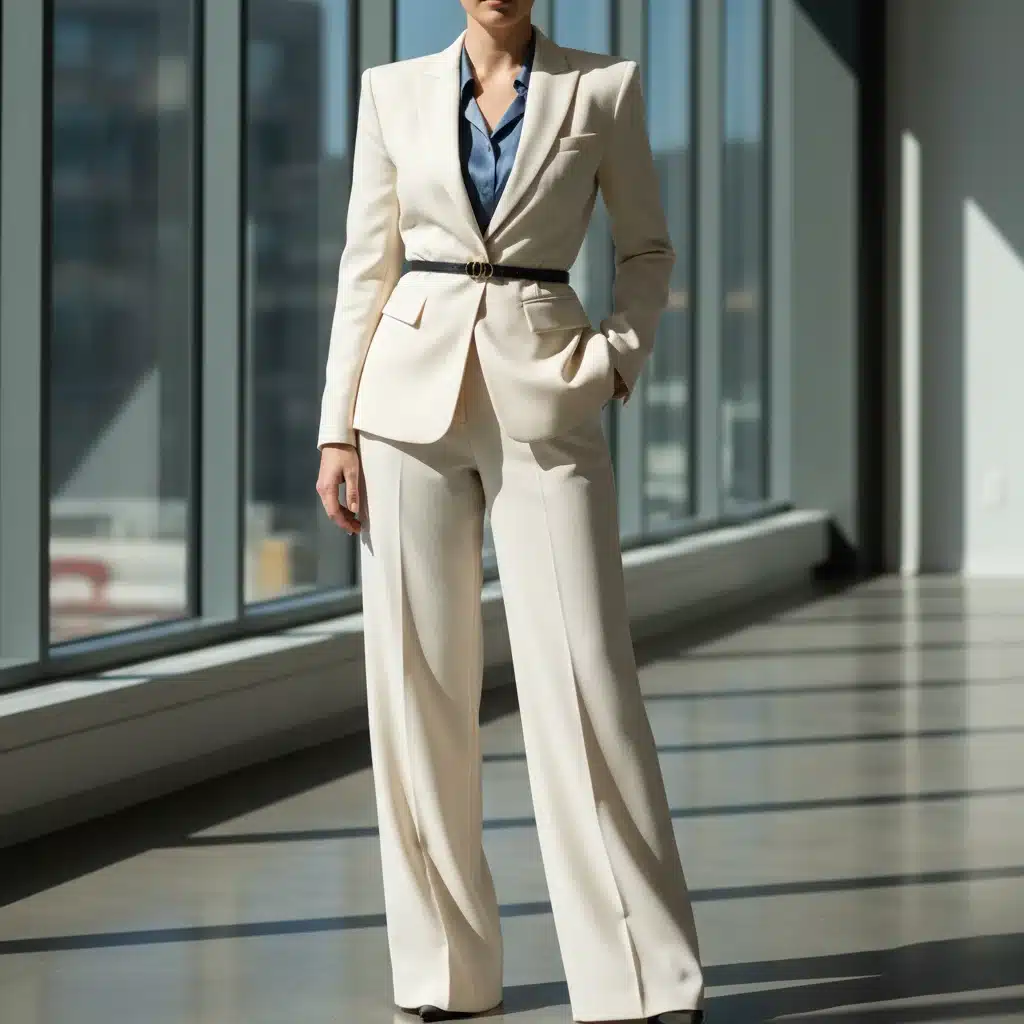
- Belts: The most obvious tool for waist definition is a belt. Experiment with different widths and styles. A wide belt can cinch in a loose dress or tunic, while a thin belt can add a subtle touch of elegance without overpowering. Place the belt at your natural waist, or slightly above, to create the most flattering line.
- Tailored Garments: Look for clothing that is designed to nip in at the waist. Peplum tops, wrap dresses, fitted blazers, and high-waisted trousers are all excellent choices. These garments have built-in structure that naturally defines your midsection.
- Tucking and Cropping: As mentioned in Rule 2, tucking in tops (full or French tuck) or wearing cropped tops that meet the waistband of high-waisted bottoms are effective ways to highlight your waist. This creates a clear break between your top and bottom halves, emphasizing the narrowest part of your torso.
- Color Blocking and Prints: Strategic use of color blocking or prints can also create the illusion of a defined waist. A darker panel at the sides of a dress, or a print that narrows at the waist, can trick the eye into perceiving a more hourglass shape.
- Layering with Open Layers: Wearing an open blazer, cardigan, or vest over an outfit can create two vertical lines that frame your torso, drawing the eye inward and creating the perception of a narrower waist.
A defined waist adds a sense of polish and intentionality to any outfit. It’s a powerful tool in your style proportions guide arsenal, capable of transforming shapeless garments into flattering ensembles. Don’t underestimate the impact of this simple yet effective styling trick.
Rule 4: Play with Lengths and Lines – The Illusion of Height and Shape
The lengths of your garments and the lines they create are fundamental in manipulating how your body appears. Whether you want to appear taller, shorter, curvier, or more streamlined, understanding how to work with lengths and lines is a crucial part of your style proportions guide. These elements can draw the eye up or down, create breaks in your silhouette, or extend your frame.
Leveraging Lengths and Lines
- Vertical Lines: Vertical lines are your best friend if you want to create an illusion of height and slenderness. Think pinstripes, pleats, long necklaces, open cardigans, or even the seams on well-tailored trousers. These lines draw the eye up and down, elongating your frame.
- Horizontal Lines: While often demonized, horizontal lines aren’t inherently bad. Strategic horizontal lines can add width where desired (e.g., a boat neck can broaden narrow shoulders) or break up a long torso. The key is placement and width. Avoid wide horizontal stripes across the widest part of your body if you wish to minimize that area.
- Hemlines: The length of your skirts, dresses, and trousers significantly impacts your proportions.
- Skirts/Dresses: A hemline that hits at the slimmest part of your leg (just above or below the knee, or at the ankle) is generally most flattering. Mid-calf lengths can sometimes cut the leg at an awkward point, but this can be balanced with the right footwear or top.
- Trousers: For trousers, a full-length hem that skims the top of your shoe (with or without a slight break) elongates the leg. Cropped trousers are stylish but ensure they hit at a flattering point, typically above the ankle bone, to avoid shortening your legs.
- Necklines: V-necks and scoop necks create vertical lines that lengthen the neck and draw attention to the décolletage, which is often very flattering. Higher necklines can shorten the neck but can be balanced with other elements.
- Sleeve Lengths: Three-quarter sleeves can be very flattering as they expose the wrist, often a narrower part of the arm, creating a delicate effect. Full-length sleeves or sleeveless options also have their place, but considering where a sleeve ends can impact the overall visual balance.
By consciously selecting garments based on their lengths and the lines they create, you gain immense control over how your body is perceived. This nuanced approach to style proportions guide allows for sophisticated and personalized styling.
Rule 5: Accessorize with Purpose – The Finishing Touch to Perfect Proportions
Accessories are not just afterthoughts; they are powerful tools in your style proportions guide. They can draw attention to specific areas, break up monotony, add vertical or horizontal lines, and ultimately complete an outfit by refining its overall balance. From jewelry to shoes, every accessory has the potential to enhance or detract from your desired proportions.
Strategic Accessorizing for Proportional Harmony
- Necklaces: Long necklaces create vertical lines that elongate the torso and draw the eye downward, which can be beneficial for those with shorter necks or fuller busts. Chokers or shorter necklaces can draw attention to the collarbone and neck area.
- Earrings: Statement earrings can draw attention to your face and neck, balancing out broader shoulders or a wider hip line by shifting focus upwards.
- Scarves: A long, draped scarf adds verticality. A shorter, tied scarf can add a touch of volume and color near the face. The way you wear a scarf can completely change the perceived proportions of your upper body.
- Bags: The size and placement of your handbag matter. A cross-body bag can create a diagonal line that is visually interesting and can break up a straight silhouette. A large tote might overwhelm a petite frame, while a tiny clutch could look lost on a taller person. Choose bags that are proportional to your body size.
- Shoes: Shoes are perhaps one of the most impactful accessories for altering proportions.
- Nude Heels/Flats: These can significantly lengthen the leg by creating an unbroken line from your leg to your foot.
- Pointed Toes: Pointed-toe shoes, even flats, can create a longer line than round or square toes.
- Boot Height: Over-the-knee boots can create a long, sleek line, especially when worn with skirts or dresses. Ankle boots can sometimes shorten the leg if worn with certain trouser lengths, so pay attention to where the boot shaft hits your leg and how it interacts with your hemline.
- Platform/Wedge: These add height without necessarily lengthening the foot, which can be great for creating overall verticality.
- Belts (Revisited): As discussed, belts are crucial for defining the waist, but they are also accessories. A contrasting belt can draw attention to your midsection, while a belt that matches your garment can create a more seamless, elongated look.
Thoughtful accessorizing is the final polish in your style proportions guide. It’s about using these smaller elements to fine-tune your overall silhouette, emphasize your favorite features, and ensure every outfit feels complete and intentionally styled. Don’t overlook the power of a well-chosen accessory to make a significant proportional impact.
Beyond the Rules: Cultivating Your Personal Style and Confidence
While these five rules of style proportions guide provide an invaluable framework, true style is also about understanding yourself. It’s about knowing what makes you feel good, what colors uplift you, and what silhouettes genuinely resonate with your personality. Fashion in 2026 is all about authenticity and self-expression. These rules are not rigid laws but rather guidelines to help you navigate the vast world of clothing and make informed choices that empower you.
Experimentation is Key
The best way to master these principles is through experimentation. Try on different combinations, stand in front of the mirror, and critically assess what works and why. Take photos of outfits you love and analyze the proportions. Did a high-waisted pant make your legs look longer? Did a belted dress define your waist beautifully? Over time, you’ll develop an intuitive understanding of what creates visual harmony for your specific body.
Dress for Your Lifestyle
Your lifestyle also plays a significant role. The perfect proportional outfit for a corporate meeting might be very different from one for a weekend brunch. Consider the context and functionality of your clothing while applying these rules. Comfort and practicality should never be sacrificed for the sake of proportion; rather, these rules should help you find stylish and comfortable solutions.
Embrace Your Uniqueness
Every body is beautiful and unique. The goal of understanding style proportions guide is not to conform to an arbitrary ideal, but to dress in a way that highlights your individual beauty and makes you feel powerful. Celebrate your curves, your height, your athletic build, or your petite frame. These rules are tools to enhance what you already have, not to change it.
Conclusion: Your Journey to Proportional Mastery in 2026
The journey to mastering style proportions guide is an ongoing one, but with these five fundamental rules, you are now equipped with the knowledge to transform your wardrobe and your confidence. Remember to embrace the Rule of Thirds for visual harmony, understand volume and balance to avoid overwhelming your frame, define your waist to create shape, play with lengths and lines for optical illusions, and accessorize with purpose to put the finishing touches on your look.
As we move further into 2026, where individual style reigns supreme, the ability to dress proportionally will set you apart. It’s a skill that transcends fleeting trends, offering a timeless foundation for a wardrobe that always makes you look and feel exceptional. Go forth, experiment, and confidently express your unique style, knowing you have the power of proportions on your side. Your most flattering and confident self awaits!